An easy way to remove bushes from DMR V12 pedals
I found the easiest way to remove DMR V12 pedal bushes. That is, the easiest way to remove them if you are like me in very specific ways, such as having random Imperial thread taps kicking around. If you don't, you'll find it's nearly as cheap to buy the proper tool for the job.
This is for the original inch-deep pedals made from about 1999, which were replaced with the current, slimmer design after 2014. We won't discuss the latter here. I can't remember how I got those out, but it didn't involve Imperial taps.
On the outside of the axles (left side of left pedal, right side of right pedal) these pedals use miniature sealed ball bearing assemblies. Those are usually easy to remove; just shove a large bolt or other pokey-stick in from the other side of the pedal and whack it with a hammer.
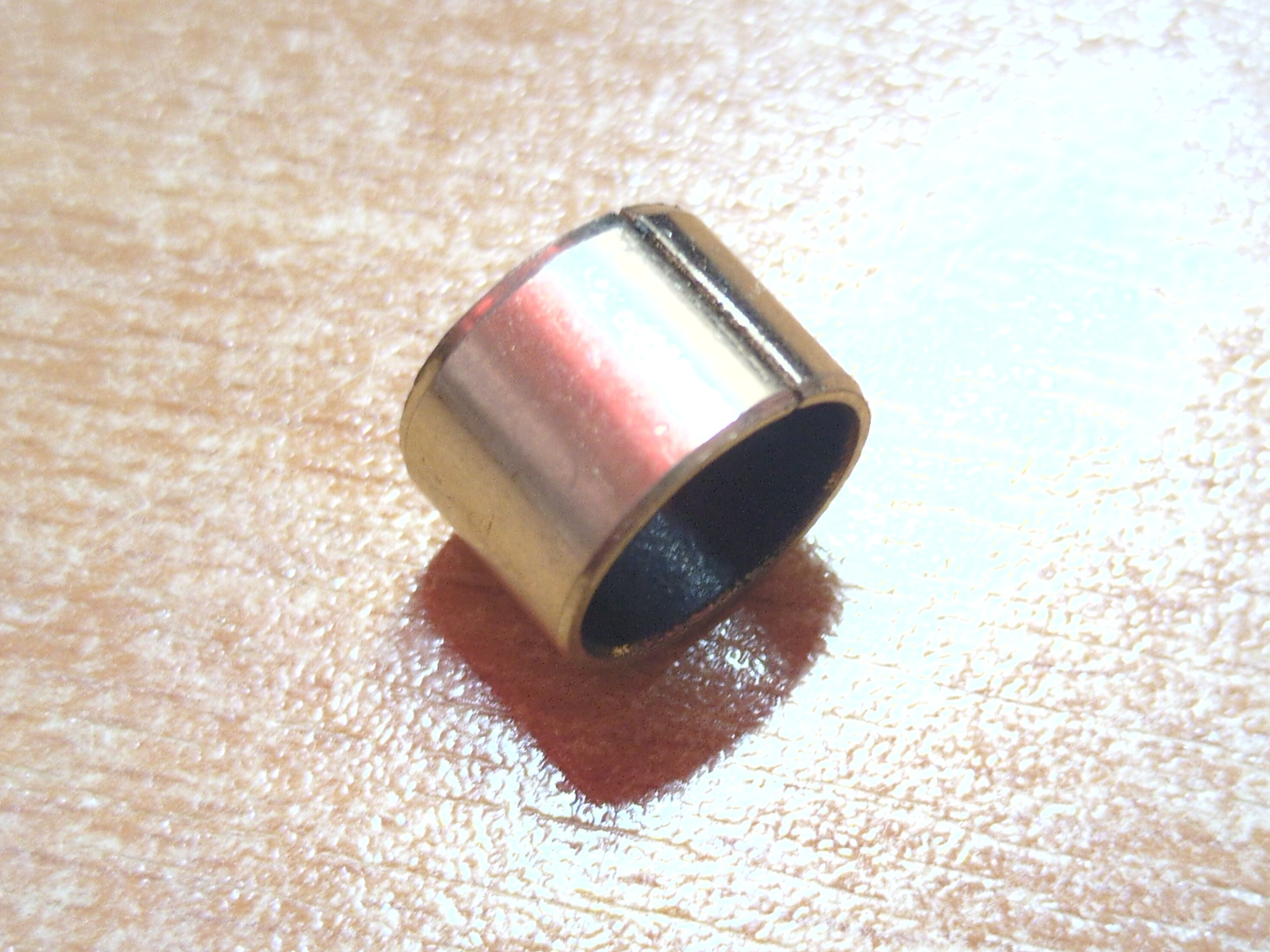
The crank ends of the axles run on PTFE-lined metal bushes. They look like this:
When they're fitted inside the pedal, they look like this:
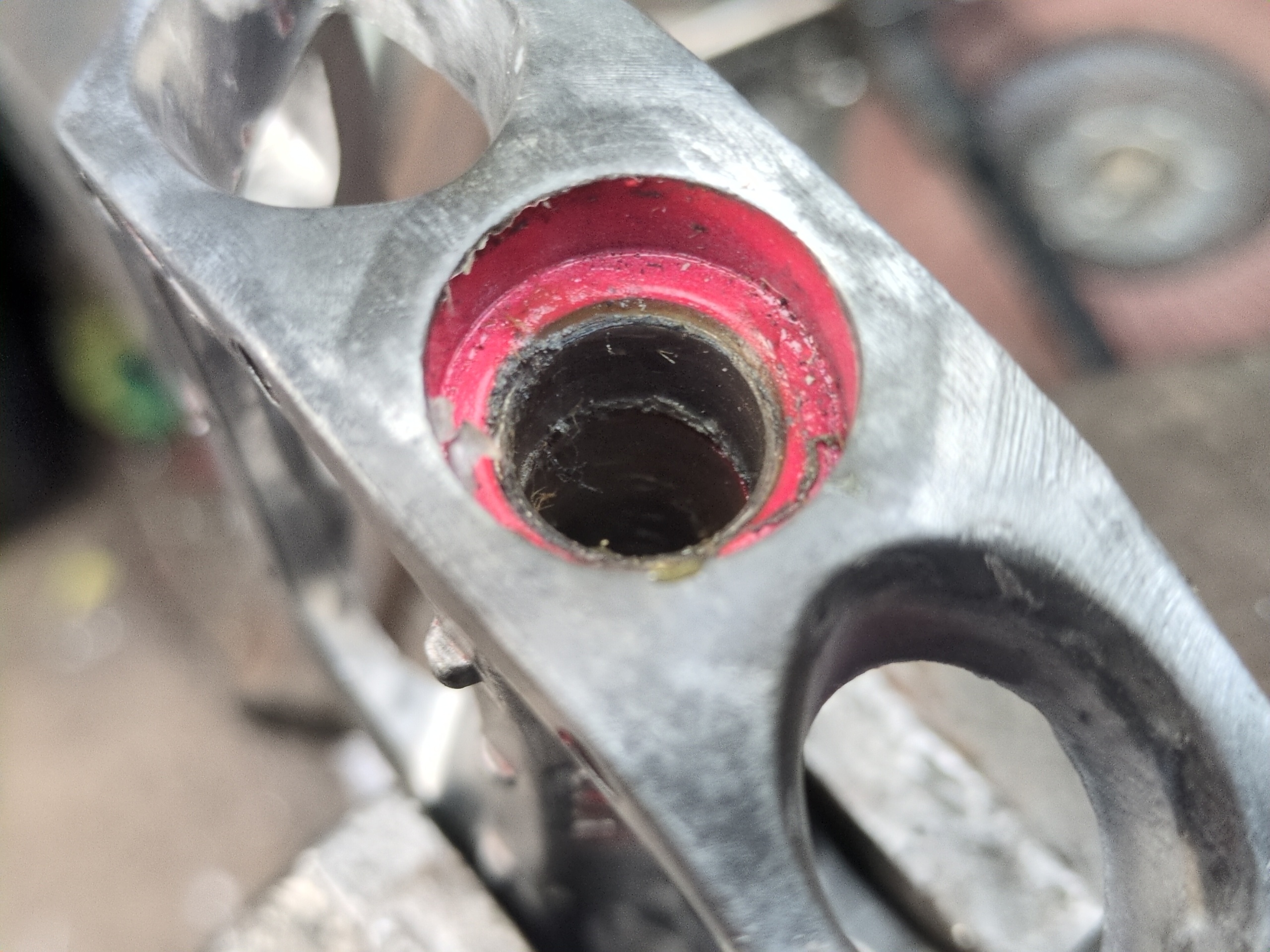
These are sometimes tricky to remove, especially if your pedal is old. The oldest of the V12s are in their late 20s, and not all of them have seen a full service. If you don't care about destroying the bushes (and you have no reason to remove them if you aren't replacing them, so this is likely), there's an easy way to get them out.
First, thread in a 1/2" UNF tap. This is the exact correct size to cut a thread into the bush while not cutting deep enough to damage the pedal body.
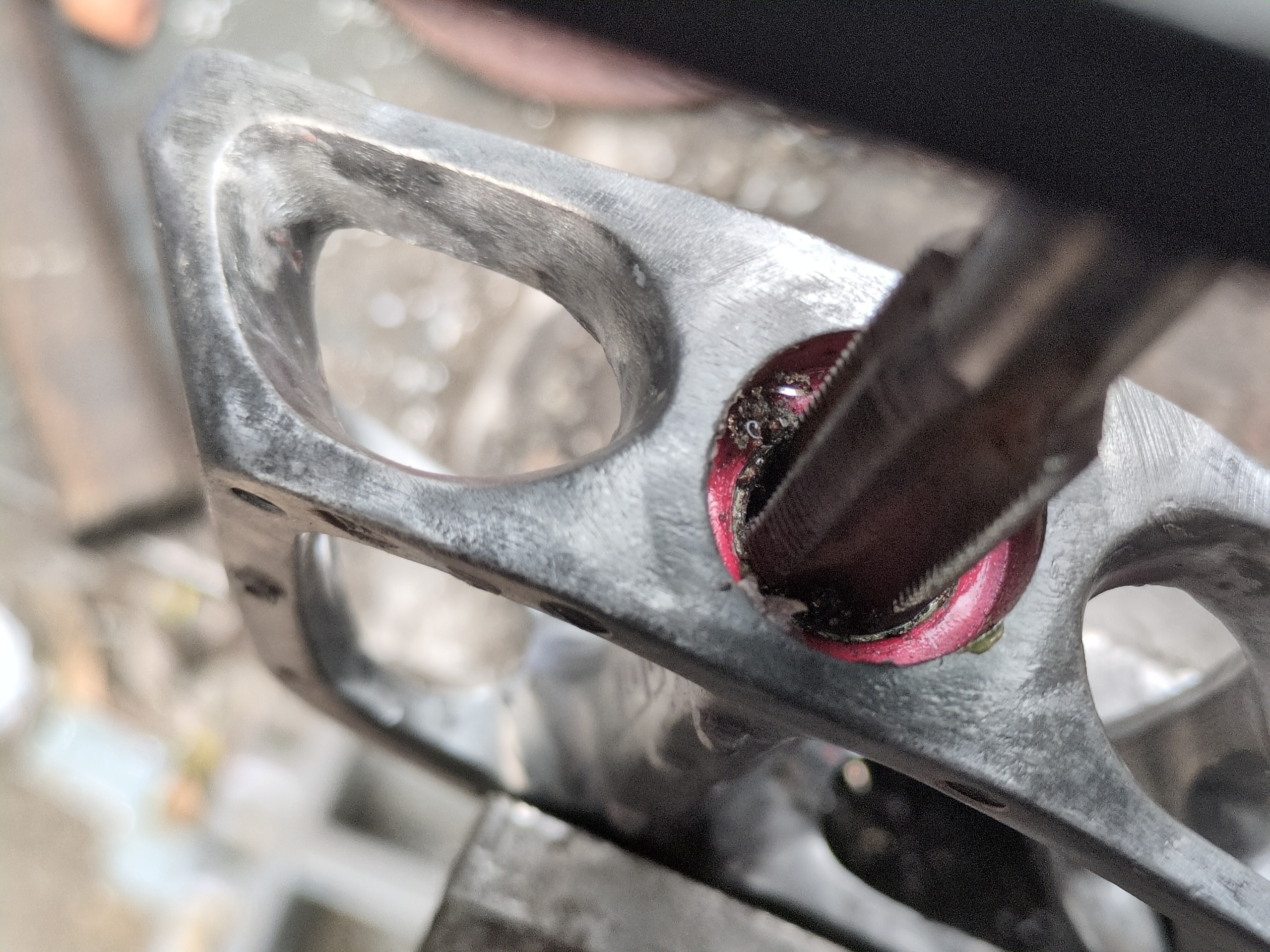
You only need to thread it in six turns or so; be careful you don't go past the bush and start cutting a thread into the pedal body.
Next, screw in a 1/2 UNF bolt from the side nearest to the hole you just tapped; you can't insert it from the other direction.
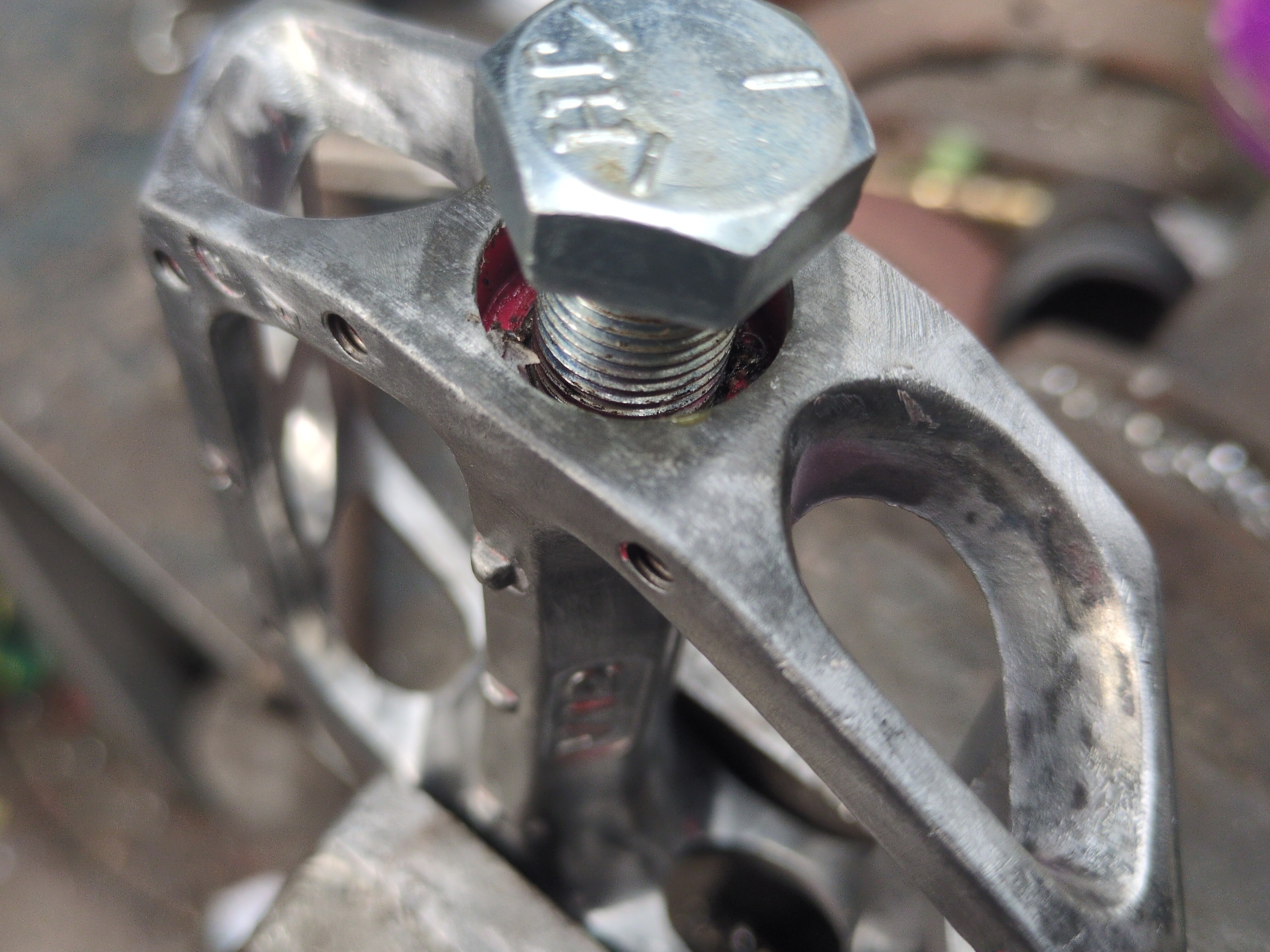
Then, insert any pokey-stick from the other direction. I used the first long bolt I found.
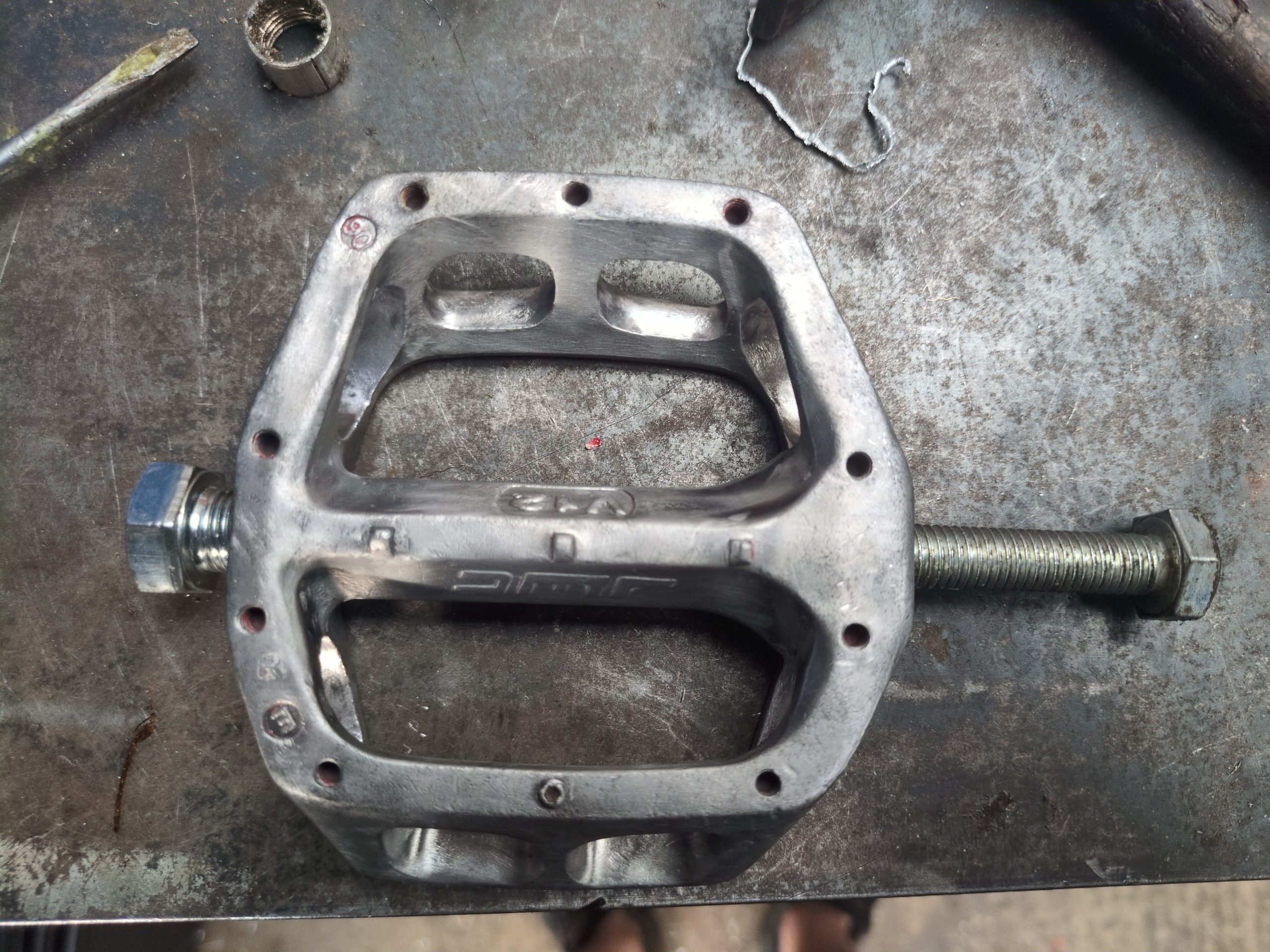
Whack the pokey-stick with a hammer and your bush should pop out.
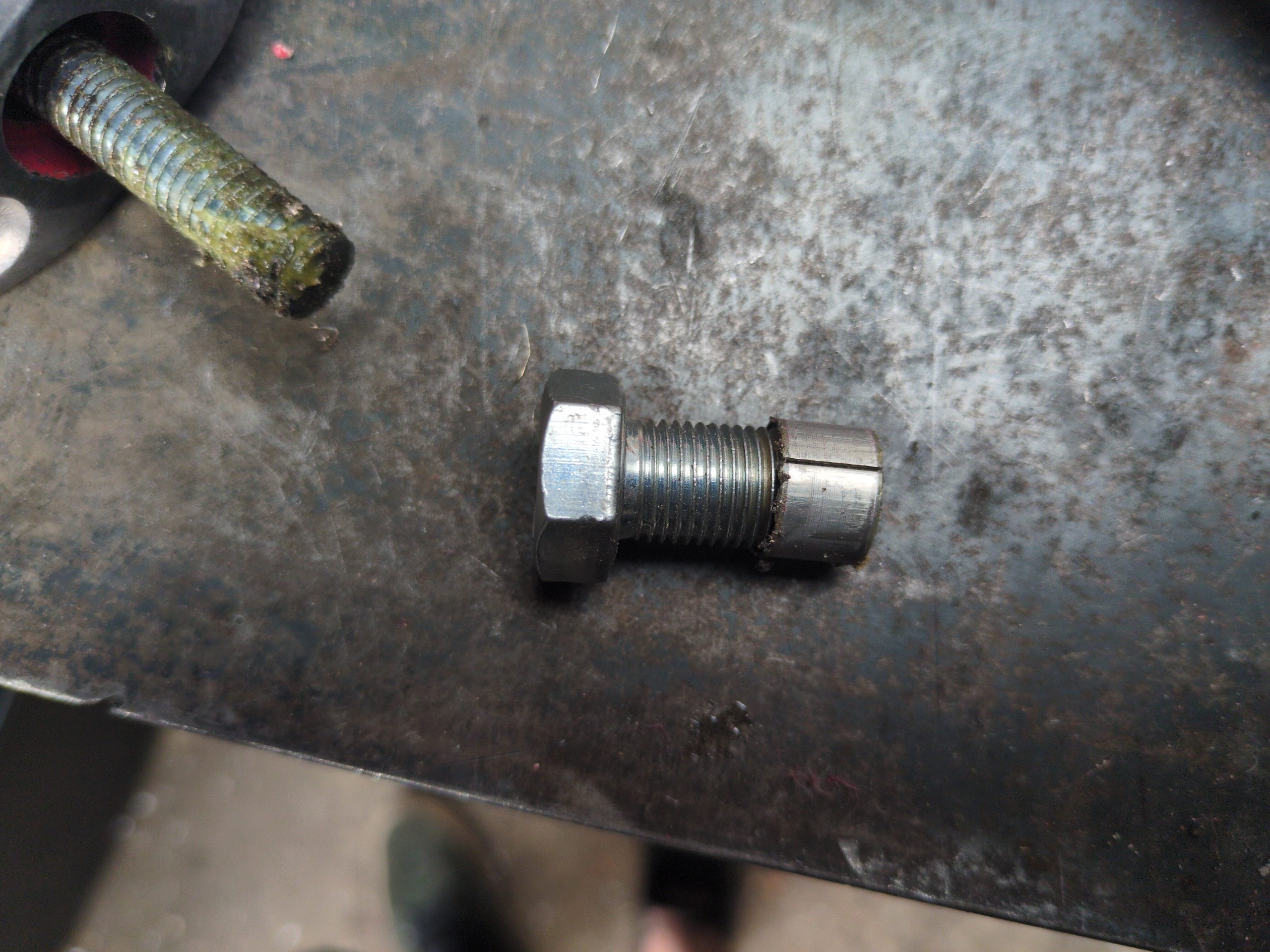
Tada!
To insert the new ones, you can use your axle as a pusher; grease everything up a little, get the bush loosely into position, slide your axle in and tap it with a soft mallet.
My motto is: Embrace the chaos. Nothing will go to plan and it'll be awesome.
Here are some DMR V12 pedals.
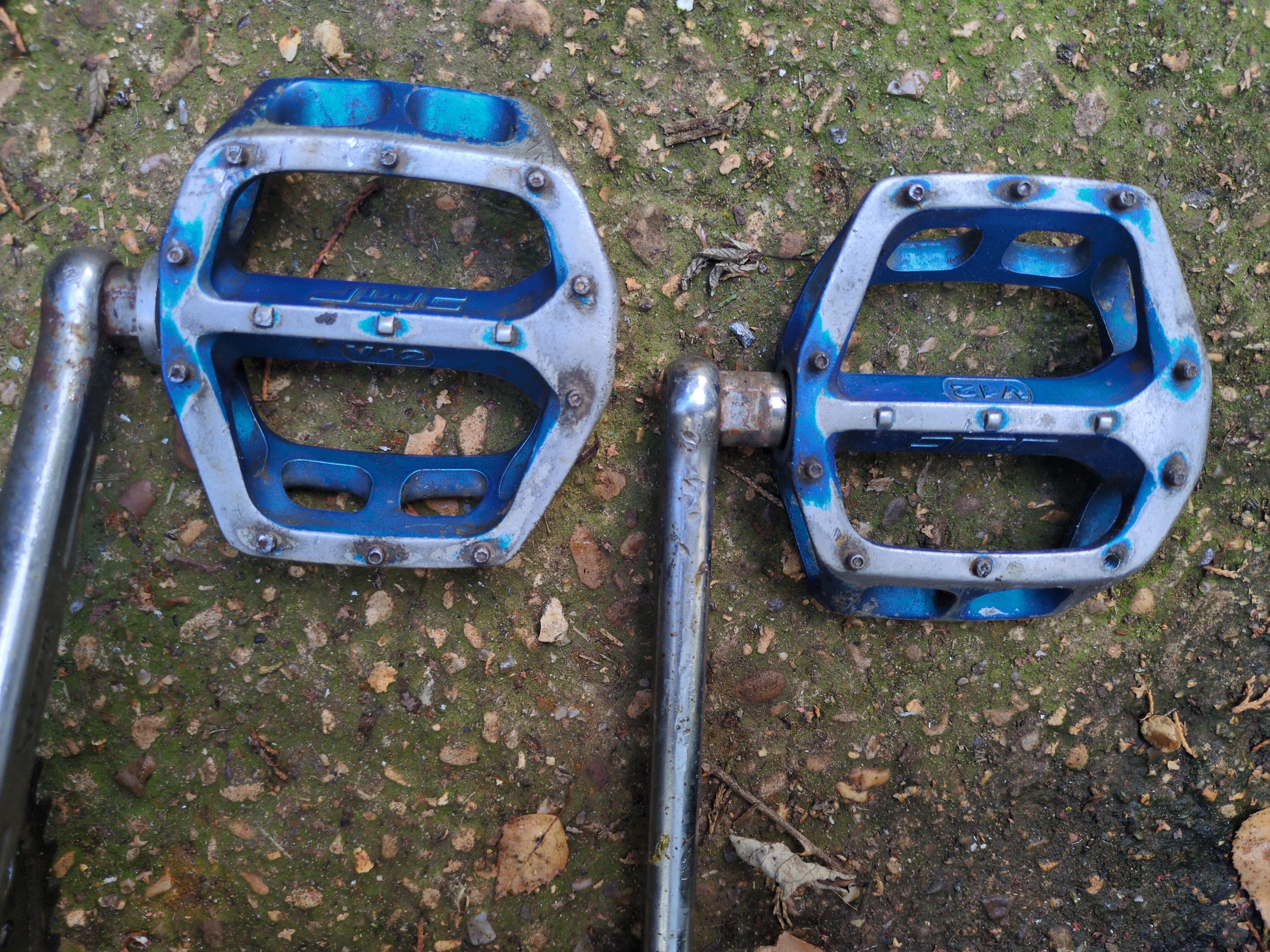
Those were seized into the crank arms; a four-foot-long steel extension tube on a spanner wouldn't get them undone, which means they were stuck, not merely tight. Not a problem, because all I needed was a fantastically rare pair of new-old-stock titanium axles...
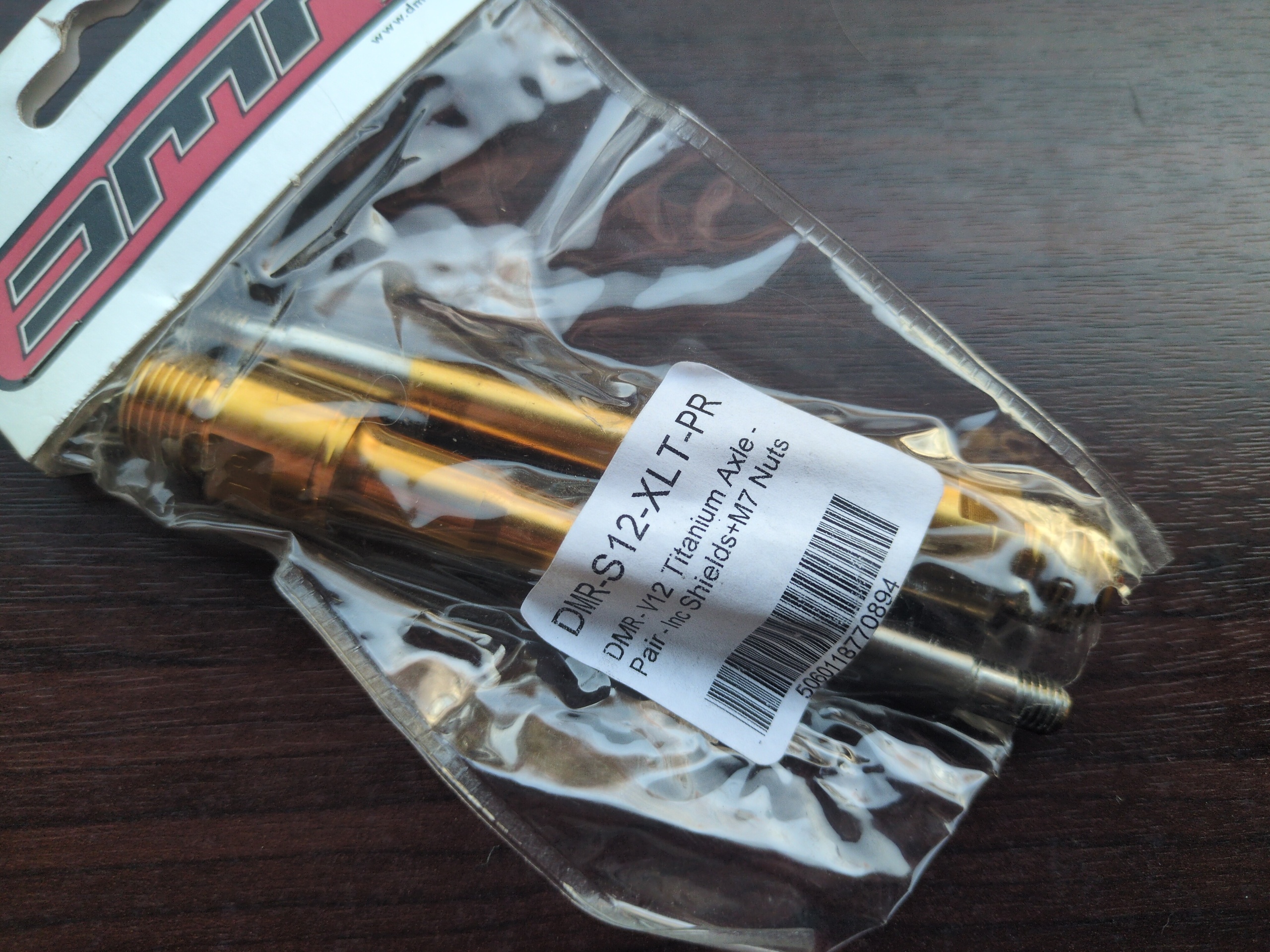
...plus a service kit, and that means I could remove the pedal bodies from the old axles and rebuild them with new internals. BUT the old end caps were fully seized too and needed to be drilled out, which damaged the pedal bodies.
I could live with that, but then it turned out the old roller bearings were so badly seized that removing them damaged the mating surface. They would never have run smoothly. Because I don't even know what a sunk cost fallacy is, let alone know how to use one, I bought another pair of tatty DMR V12 pedals for £14.80 on eBay.
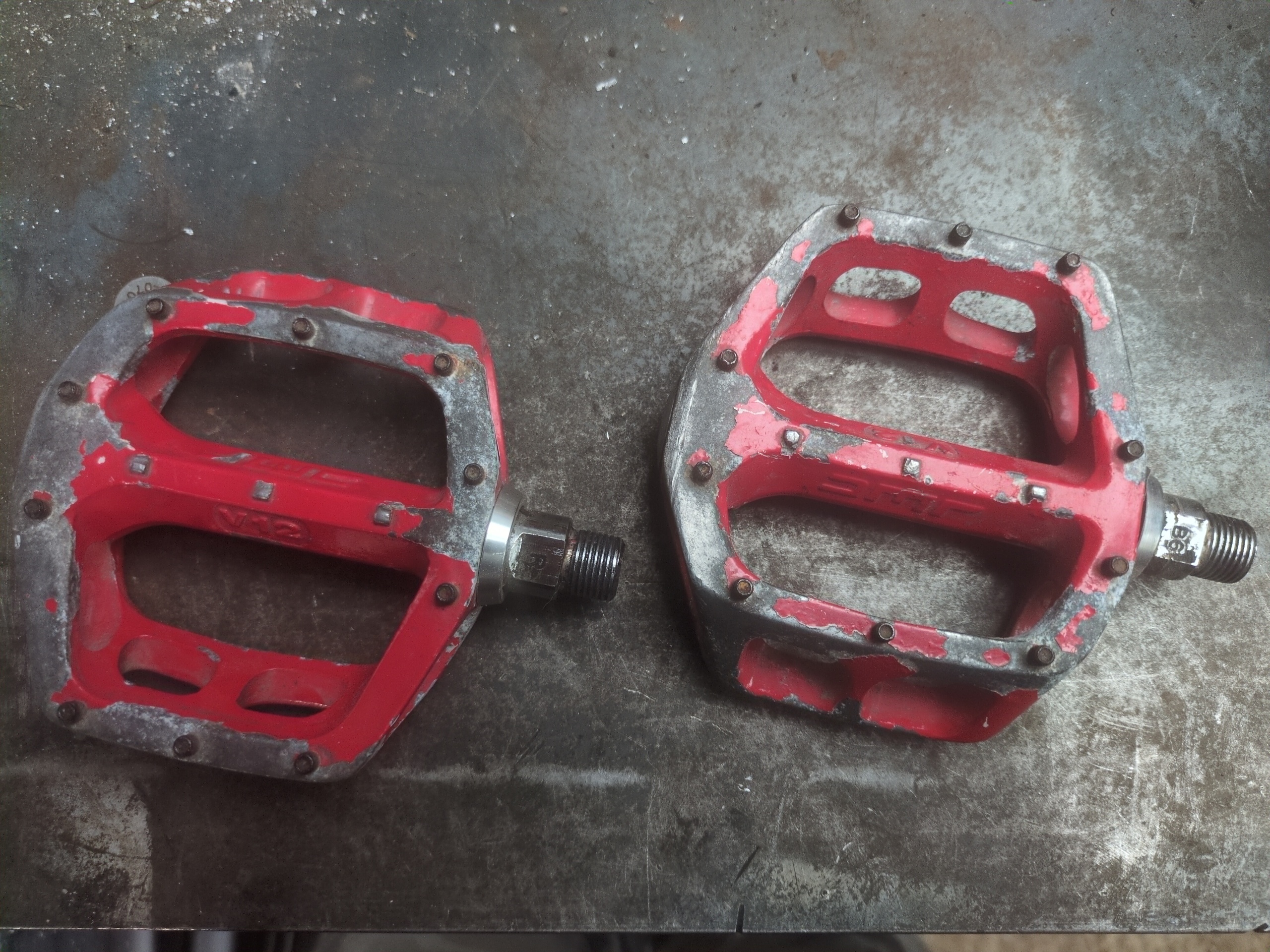
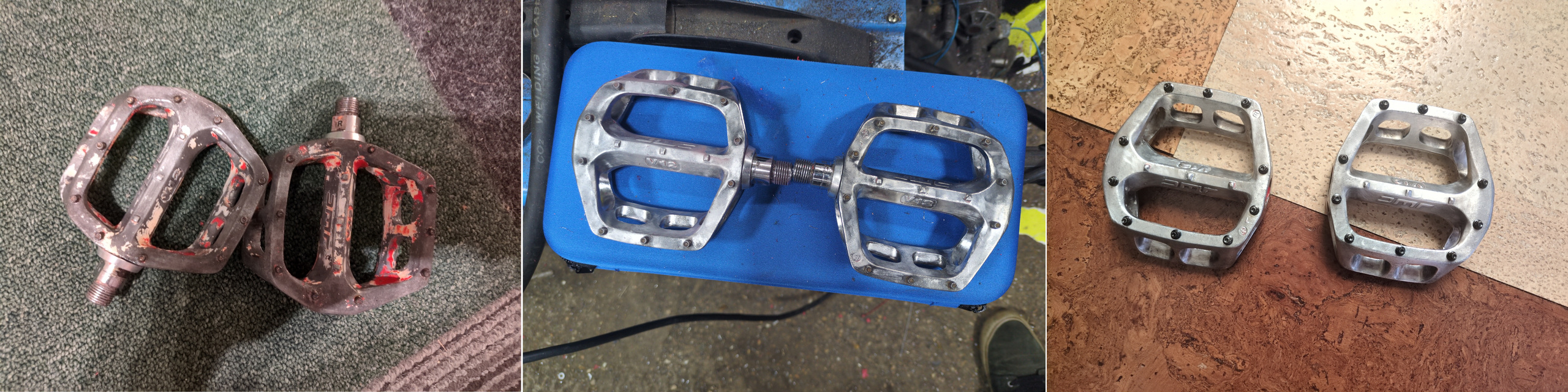
They were ugly, but still usable. Getting them to look presentable took three rounds of paint stripper and a lot of abrasives. My workshop's bin is a graveyard of Dremel tools.
I put new Funn pins in them; for this project (of course there's another project) I wanted silver with black accents, rather than ridiculous bling.
The next part should have been the easy bit: reassemble the pedals with the new internals and everything would go to plan. Chaos had other ideas:
-
The retaining nuts for the axles have M7 threads. That's a weird size that even I don't have kicking around. But also, one of them is a left-hand thread (it tightens anti-clockwise), so it's something I don't have kicking around twice.
-
That's fine, because new nuts were included in the titanium axle kit. Except at some point between it being packaged and it getting to me, a hole appeared in the packaging, which caused those nuts to be somewhere I am not.
-
That's fine, because I could just re-use the ones from the pedals. Except for some reason both axles in these pedals had conventional right-hand threads. I don't know if that's a manufacturing variant or what. It means I lacked a left-hand-thread M7 nut.
-
Oh well, at least I can re-use the left-hand-thread M7 nut from the internally-destroyed blue pedals. Except instead of the correct left-hand-thread nut someone had, using some kind of ingenuity that I refuse to muster, managed to jam some right-hand-thread Imperial nut onto the left-hand thread. So I couldn't use that one either.
In the end, I grabbed a random M6 nut, drilled out the threads, then ran a left-hand-thread M7 tap through it. It's fine. Someone in the future is going to be upset that one nut needs a 10mm socket and another needs an 11mm socket, but they'll just need to learn a little acceptance.
Anyway:
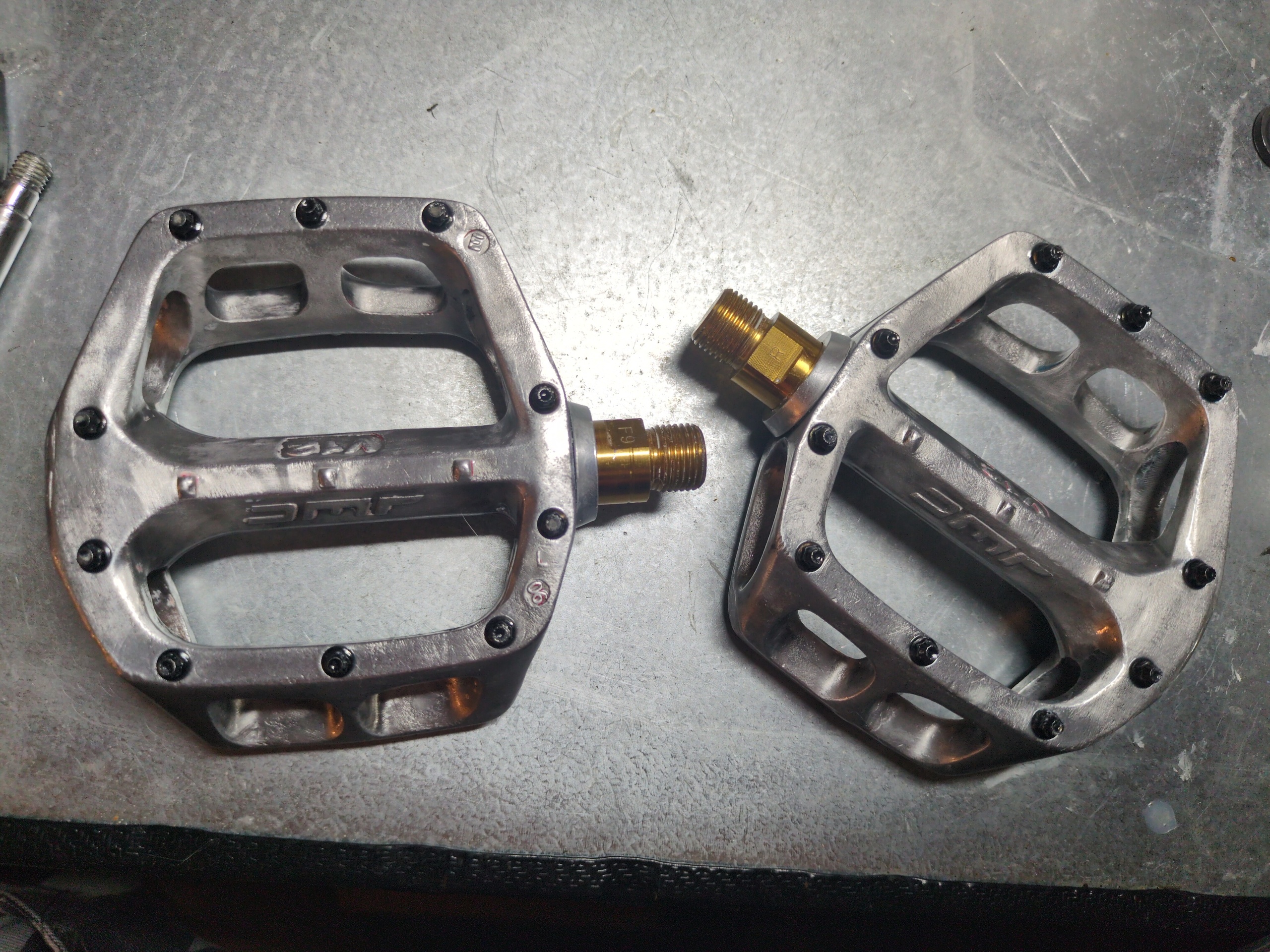
Aren't they nice? :)
And all of that is in service of this...
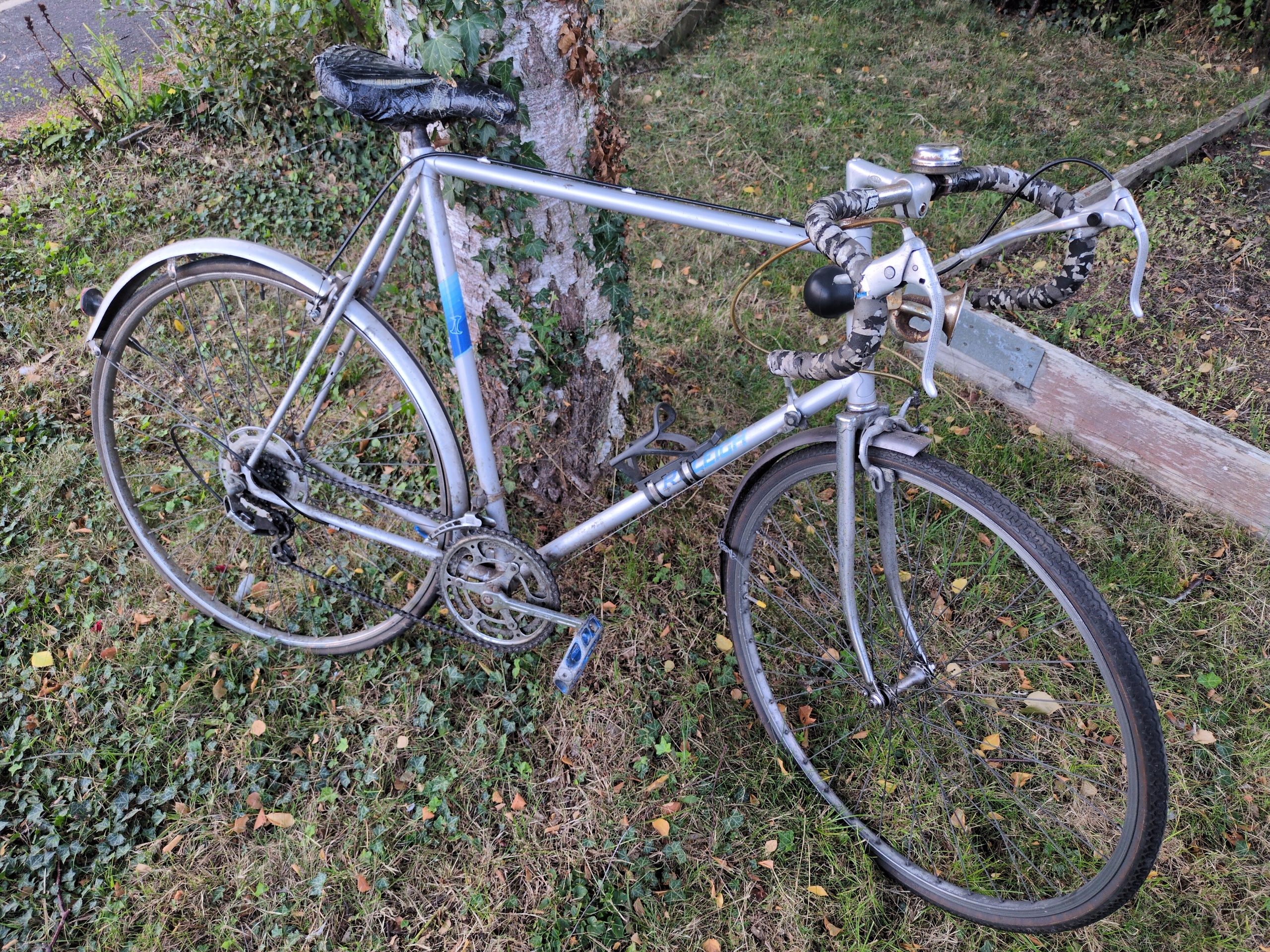
...but that's another story. See you soon.